
Hazards of Oxygen Deficient Atmospheres
Safety professionals and others have recognized the hazard of entering a confined space or dangerous area where toxic gases are present.... Continue reading →

Anticipate, Recognize, Evaluate & Control Health Hazards in the Workplace
Safety professionals and others have recognized the hazard of entering a confined space or dangerous area where toxic gases are present.... Continue reading →

Before using any type of personal protective equipment, employers and employees should use the hierarchy of controls which includes elimination, substitution, engineering... Continue reading →

Cleaning agents and disinfectants are used in a broad range of occupational settings to remove dirt, carbon, and other materials from... Continue reading →

Thirteen years after it was originally proposed, a revised standard for lead exposure to workers was approved on February 15,... Continue reading →
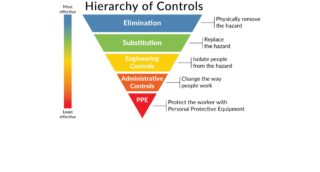
For most OSHA standards, employers are required to reduce employee exposures to below the Permissible Exposure Limit for the particular... Continue reading →
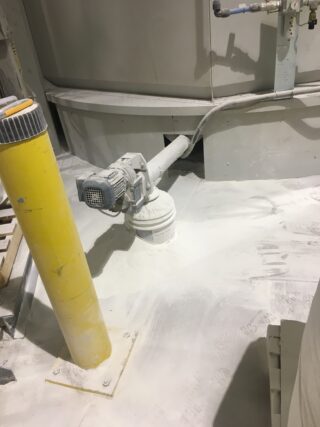
Occupational exposure to dust, even at low doses, is a risk to workers’ health and significantly associated with respiratory symptoms. Not... Continue reading →
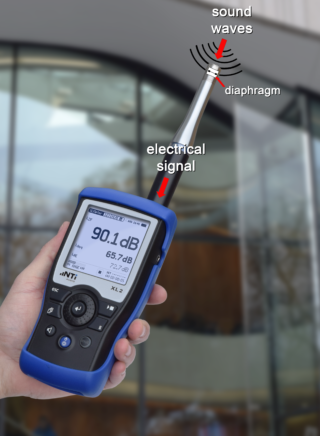
Noise is unwanted sound. Technically, it is sound pressure and includes a range of frequencies that can be detected by... Continue reading →
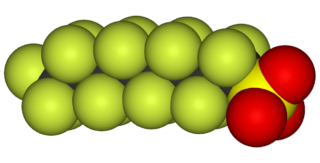
In recent years, the public has been concerned about the prolific amount of Per- and Polyfluoroalkyl substances (PFAs) in the... Continue reading →

Ever since the creation of the OSHA Respirable Crystalline Silica (RCS) standard, the emphasis has been on manufacturing companies that... Continue reading →
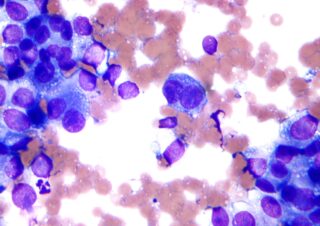
As early as 1775, an English physician, Sir Percivall Pott, reported a high incidence of skin sores on men working... Continue reading →